30 Amp or 50 Amp: What Your RV Really Needs at the Pedestal
A plain explanation of what the numbers on the power pedestal mean, and how to keep from tripping a breaker in the middle of a Florida afternoon.
October 27, 2026 · 4 min read
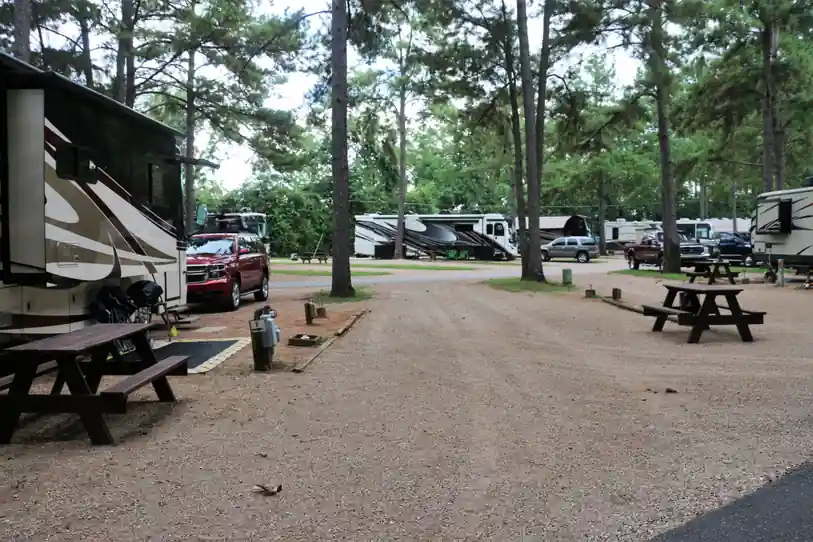
You pull up to your site, walk back to the pedestal, and there's a row of outlets and breakers waiting on you. Tallahassee RV Park has 20, 30 and 50 amp service, with full hookups for water, electric and sewer. Most RVers know which plug their rig wears. Fewer know why the number matters, or what actually happens when the plug and the pedestal don't line up. Here's the plain version, the kind you'd get from the fellow in the next site over.
What the numbers mean
A 30 amp RV connection is a single 120 volt line rated for 30 amps. Multiply the two and you get about 3,600 watts to run everything in the rig at once. A 50 amp connection is really two 120 volt lines, each rated for 50 amps, which adds up to about 12,000 watts. That's more than three times the power, and the second line is the reason. You can tell them apart by the plug: three prongs for 30 amp, four prongs for 50 amp.
A 20 amp outlet is the same kind you'd find on an ordinary household circuit. It will run lights, a phone charger, a laptop and a small appliance or two. It will not run an air conditioner and a microwave at the same time. Plenty of small campers and pop-ups are built to live happily on that little bit of power.
Why a Florida stay puts your power to the test
Air conditioning is the big draw. A typical rooftop unit pulls somewhere around 12 to 16 amps while it's running, and a good deal more for a moment when the compressor starts. North Florida stays hot and humid for a long stretch of the year, so your air conditioner is going to run, and run hard. On a 30 amp hookup, one air conditioner leaves you about half your power for everything else. Add the microwave, the coffee maker and an electric water heater, and the breaker will let you know about it.
On a 50 amp hookup, a rig with two or three air conditioners has room to keep them all running while you cook supper. That headroom is what the bigger plug buys you. It's also why big motorhomes and fifth wheels with residential refrigerators and a washer-dryer are almost always built for 50 amp.
Read your own rig before you arrive
Walk out to the coach and look at the power cord or the inlet on the side of the rig. Count the prongs. Three means 30 amp, four means 50 amp, and a household-style plug means 20. If the cord is stowed away and you can't tell, the owner's manual or the label by the electrical panel will say. Most travel trailers and many smaller rigs are 30 amp.
Adapters change the plug, not the power
An adapter changes the shape of the plug and nothing else. The common one is called a dogbone. Plugging a 30 amp rig into a 50 amp outlet with a rated adapter is routine, and your rig will only draw what its own wiring is built for. Your rig's main breaker is what protects its cord and wiring, so keep it in good order.
Going the other way, a 50 amp coach on a 30 amp outlet is held to about 3,600 watts, and you'll have to choose what runs together. Make sure any adapter seats snug. A loose connection makes heat, and heat is what melts plugs.
Habits that save breakers
- Switch the pedestal breaker off before you plug in, then switch it on once the cord is seated. It's easier on the plug.
- On a 30 amp hookup, start the big loads one at a time. Let the air conditioner settle before you fire up the microwave.
- Run the water heater on propane when you're also cooking or cooling on a 30 amp connection, if your rig lets you choose.
- Put a surge protector or an energy management system between your cord and the pedestal. It guards your rig against bad voltage that isn't your fault.
- Feel the plug and cord after the first hour. Warm is normal. Hot, discolored or smelling of plastic is not, and it means you shut things off and look.
Tell the office what you need
The park can't promise a specific site, though it does assure accommodation for the stay you reserve. So when you ask for a site, say what you need up front: the amp service your rig takes, how long the rig is, and that you want a pull-through if you do. The park runs long pull-through sites, shaded or open, for big rigs, and the office can tell you what fits when you describe yours. You can send a reservation request through the park's reservation page, or call (850) 878-7641. Online requests need 72 hours of notice, and anything sooner is best handled by phone.
Get the power question settled before you back in, and the rest of the stay takes care of itself. Once the air conditioner is humming, the pool and the clubhouse are waiting.
Tallahassee RV Park, (850) 878-7641
Call (850) 878-7641More articles
Planning an FSU Home Game Weekend from an RV
The rate, the prepaid rule and the timing you need to know before you book an RV site for a Seminoles home weekend.
Living in an RV in Tallahassee by the Month
Everything to know about the monthly rate, the wait list and the rules before you settle in for three months or more.